



What indoor signage covers
Indoor signage is every sign inside a building that tells people where they are, where to go and what to do. Clear indoor signs save visitors time, cut down repeated questions to staff, and help everyone find exits quickly in an emergency.
Types of indoor signs
- Wayfinding and direction signs that guide visitors to floors, departments, lifts and car parks
- Directory boards listing tenants, floors or departments at entrances and lift lobbies
- Safety signs such as exit (“Keluar”), fire extinguisher, assembly point and no smoking
- Facility signs for toilets, prayer rooms, nursing rooms and lifts
- Hanging and projecting signs above counters, aisles and corridors
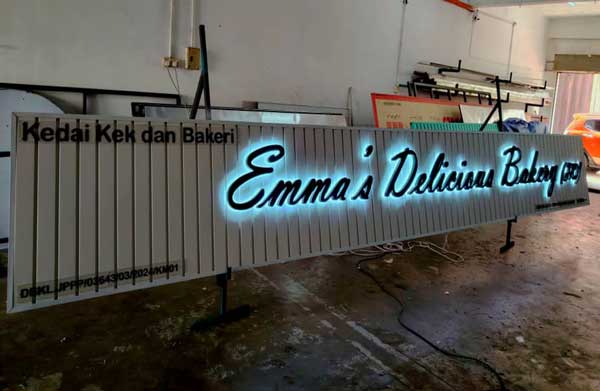
- Menu and promotion displays inside shops, including an LED lightbox signboard behind the counter
Indoor signage for different buildings
- Shopping malls and shop interiors: aisle, counter and promotion signs
- Clinics and hospitals: department signs, room numbers and patient directions
- Schools and universities: block, classroom and office signs (signboard sekolah)
- Mosques and surau: entrance names, prayer hall, ablution area and directions
- Factories and warehouses: area names, safety and direction signs inside the building
For reception logos, acrylic name plates and door signs in an office, see office signage. For wall graphics and frosted glass, see glass sticker.
Keeping a building consistent
Indoor signs work best when they share the same colours, fonts, symbols and mounting height. We plan the full set together, so directions, room signs and safety signs read as one system throughout the building.
Indoor signage price
- The number and size of signs
- The materials and finishes
- Hanging, wall-mounted or freestanding
- Lit signs such as directories in lightboxes
- Installation across floors or buildings
Send us a floor plan or a list of the signs you need, and we will reply with a quotation.
For hazard signs on construction sites, in warehouses and in workshops, see safety signage.
Indoor wayfinding signage that helps visitors find their way
Useful indoor signage begins at the entrance. A visitor should be able to locate the reception, lifts, toilets, surau, offices or clinic rooms without repeatedly asking for directions. Consistent wording, clear arrows, readable lettering and sensible placement make the system easier to follow. Materials may include acrylic door plaques, wall-mounted directories, hanging signs, printed vinyl and metal panels, depending on the building and how frequently labels change.
Before ordering individual signs, plan the routes visitors will follow through the premises. A multi-floor office directory and a small retail shop need different wayfinding solutions. For branded reception logos and room identification, explore our office signage. Where hazard warnings or emergency signage are required, see safety signage and check the standards applicable to your premises.
How to plan an indoor signage quotation
Send a floor plan or photographs of each proposed sign location, a room or destination list, approximate sign sizes, preferred languages and expected quantities. Include building management requirements, access restrictions and any need to replace room names later. A useful quotation should cover the materials, mounting, installation and practical maintenance requirements rather than just the price of an individual plaque.
Plan a wayfinding system before ordering panels
Our wayfinding signage design guide for Malaysian offices and buildings explains entrances, directories, corridor decision points, room plaques and a practical sign schedule. Use it to plan the visitor journey before requesting a quotation for custom indoor signs here.
Building a wayfinding system rather than ordering isolated signs
Useful indoor signage begins with the visitor journey: entrance, reception, lift lobby, corridor decisions and final room. A directory identifies destinations, directional signs guide visitors towards them, and door plaques confirm arrival. Consistent naming is essential. If a destination appears as “Customer Service” on the directory but “Service Counter” on the door, visitors may be uncertain even when the panels are attractive.
Choosing mounting styles
Wall signs work where a clear surface is available, while suspended signs may help visitors see information before reaching a corridor junction. A directory with replaceable inserts can be suitable for premises where departments or tenants move regularly. Contrast, viewing distance, cleaning and accessible placement matter more than decoration alone. Required emergency signs must follow the applicable approved specification rather than being redesigned to match brand colours.
What to prepare for manufacturing
Share floor plans or site photographs, the approved destinations and sign locations, the language required and quantities. A sign schedule with a unique ID for each location helps keep fabrication and installation accurate. For a design planning guide, see wayfinding signage design; for custom manufacture, send a sign schedule via our contact page.